Commercial Overhead Doors in Jefferson, North Carolina
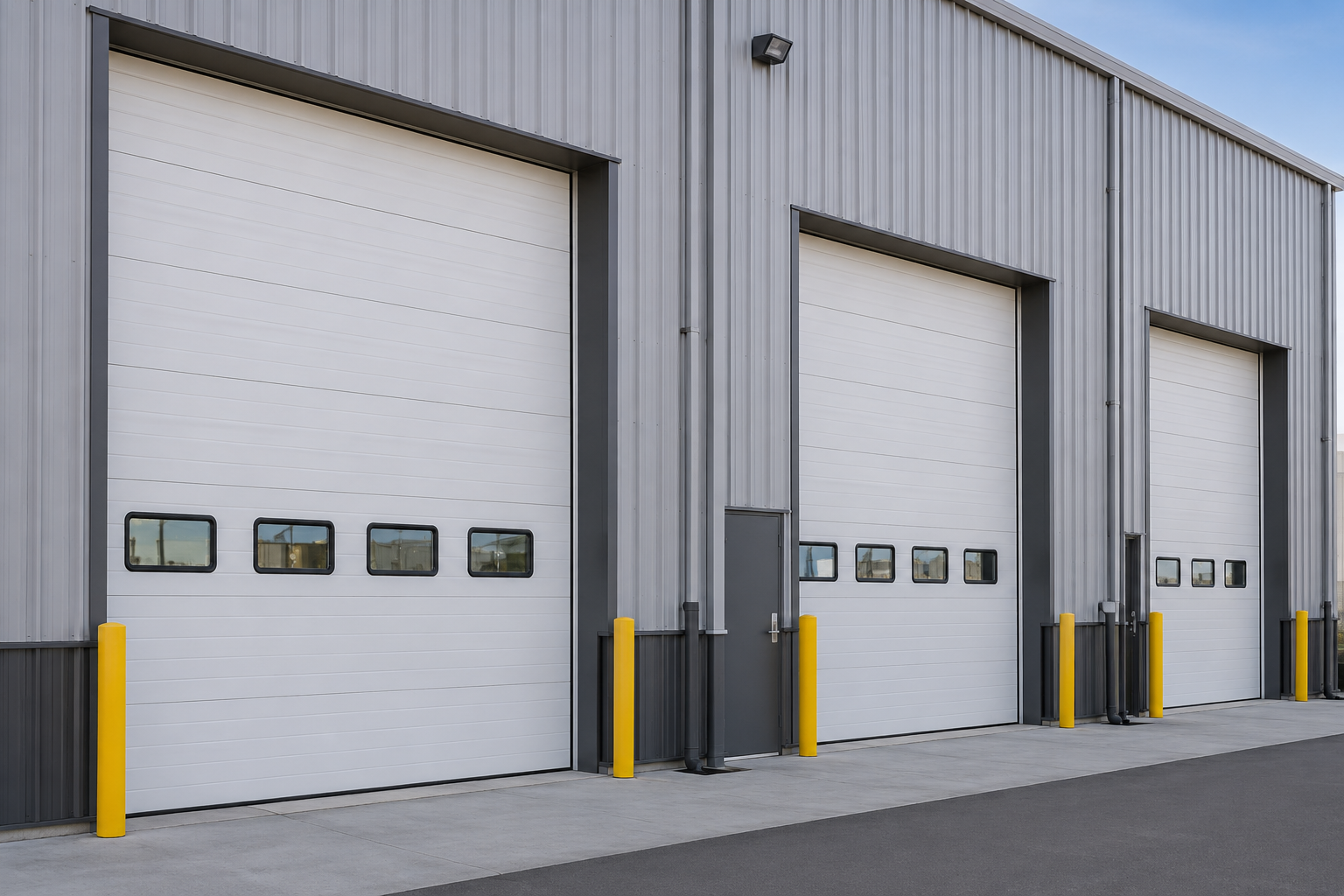
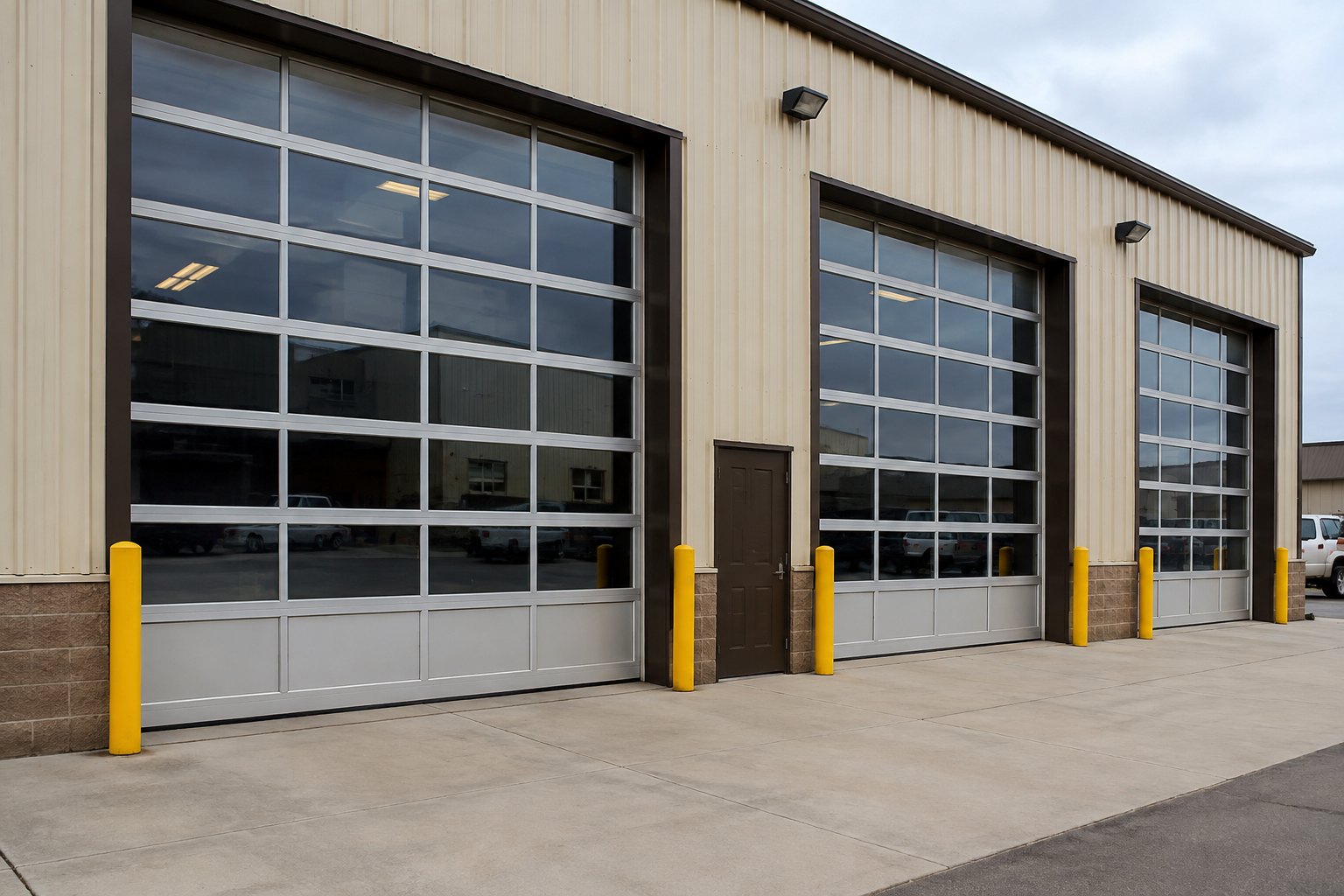
Heavy-Duty Openings That Keep Your Operation Moving
When a commercial door goes down, the whole building stops with it: trucks wait, crews idle, and product sits where it should not. We supply and install rolling steel, sectional, and fire-rated overhead doors for warehouses, shops, fire departments, and manufacturing sites across Jefferson, North Carolina, West Jefferson, Wilkesboro, and job sites throughout the state.
Commercial specification is a different exercise from residential. Cycle counts, wind load, insulation values, fire ratings, and operator duty class all have to match how the building actually runs, and undersizing any of them shortens the life of the whole assembly. We size high-cycle spring systems, specify operators to the duty they will see, and set up preventive maintenance so failures get scheduled rather than sprung on you. Ashe County Garage Doors has served North Carolina businesses since 1988. Request a site visit through our contact page and we will come measure the opening.
Commercial Overhead Doors We Provide
Rolling Steel Service Doors
Interlocking slats coil into a barrel above the opening, which suits buildings with no room for horizontal track. Durable, secure, and well matched to loading bays, storage units, and equipment bays.
Sectional Overhead Doors
Insulated steel sections on overhead track give better thermal performance and quieter travel than rolling steel. A strong fit for conditioned warehouses, service bays, and shops where temperature affects the work.
Fire-Rated Rolling Doors
Labeled assemblies close automatically when the alarm system triggers, protecting openings between rated walls. Installation, annual drop testing, and resetting the door after activation are all handled to current code requirements.
High-Cycle Spring Systems
A door opening 50 times a day burns through standard springs quickly. High-cycle torsion assemblies rated for far more travel keep a busy opening in service instead of on a repair schedule.
Commercial Door Operators
Trolley, hoist, jackshaft, and slide operators are specified by duty class, from occasional use to continuous cycling. Control stations, safety edges, and interlocks get wired to match how crews work the door.
Preventive Maintenance Programs
Scheduled inspections cover spring tension, cable condition, roller wear, operator function, and safety devices. Catching wear on a planned visit avoids the unplanned shutdown that costs a great deal more.
How Reliable Doors Support Daily Business Operations
Downtime You Can Plan
A door specified for its actual workload fails predictably rather than randomly. Scheduled maintenance turns an operational risk into a simple line item you can budget for and work around.
Built for the Cycle Count
Commercial hardware is rated in tens of thousands of cycles rather than a few thousand. Matching that rating to your traffic separates a door lasting a decade from one needing constant attention.
Security That Holds Up
Heavy-gauge steel, robust locking hardware, and properly anchored track resist forced entry far better than light residential assemblies. Your inventory, tools, and equipment end up sitting behind a real barrier.
Temperature and Cost Control
Insulated sections and tight perimeter seals keep conditioned air inside the warehouse where you paid to condition it. In buildings with large openings, that difference shows up directly on the monthly utility bill.
Safer Working Areas
Safety edges, photo eyes, and correctly adjusted operators protect the people and forklifts moving through a busy opening. Properly maintained doors also stay balanced, which prevents the sudden drops that injure crews.
Code Compliance Handled
Fire-rated assemblies require labeled components, correct installation, and documented annual testing. Having one contractor manage all three keeps your inspection paperwork clean without chasing three separate vendors for records.
Keep Your Business Moving With Dependable Access
Every hour a bay sits out of service costs more than the repair that would have prevented it, which is why commercial door work should be specified around your operation rather than around a catalog page. We look at how many times the door cycles, what the building holds, what weather does to that elevation, and what your inspection requirements demand, then quote the assembly that fits. Ashe County Garage Doors has done that for businesses around Jefferson, North Carolina and across the state, including work at the Biltmore Estate. Send your opening dimensions and cycle expectations through our contact page and we will arrange a site visit.
Frequently Asked Questions
What is the difference between rolling steel and sectional doors?
Rolling steel coils into a barrel above the opening and needs no ceiling track, which suits tight buildings. Sectional doors travel on horizontal track and offer better insulation and quieter operation.
How often should a commercial door be inspected?
Quarterly for high-traffic openings and at least annually for lighter use. Fire-rated doors need documented drop testing every year regardless of how often the opening actually gets used.
What is a high-cycle spring and do we need one?
It is a torsion spring wound to survive many more openings than standard. If your door cycles more than about 20 times daily, high-cycle springs repay themselves in avoided downtime.
Can a fire-rated door be reset after it drops?
Yes, but only by a qualified technician. Resetting involves rewinding the governor, verifying the release mechanism, and re-testing the assembly so the door will drop correctly the next time.
Should a commercial door be insulated?
If the space is heated, cooled, or houses temperature-sensitive product, yes. Large openings lose conditioned air rapidly, and insulated sections also cut noise transmission into the working area behind them.
What causes a commercial door to come off its track?
Impact from a forklift or truck is the usual culprit, followed by worn rollers and loose track brackets. Doors hit hard should be inspected even when they still appear to run.
How long does a commercial door installation take?
A single standard opening is typically a one-day job, while multi-bay projects run longer. Ashe County Garage Doors schedules commercial work around production hours across Jefferson, North Carolina wherever possible.
Can you service doors from other manufacturers?
Yes. Ashe County Garage Doors has maintained commercial openings for 37+ years from our Jefferson, North Carolina shop, and we stock parts for the rolling steel and sectional lines common regionally.
What our customers have to say...
Testimonials